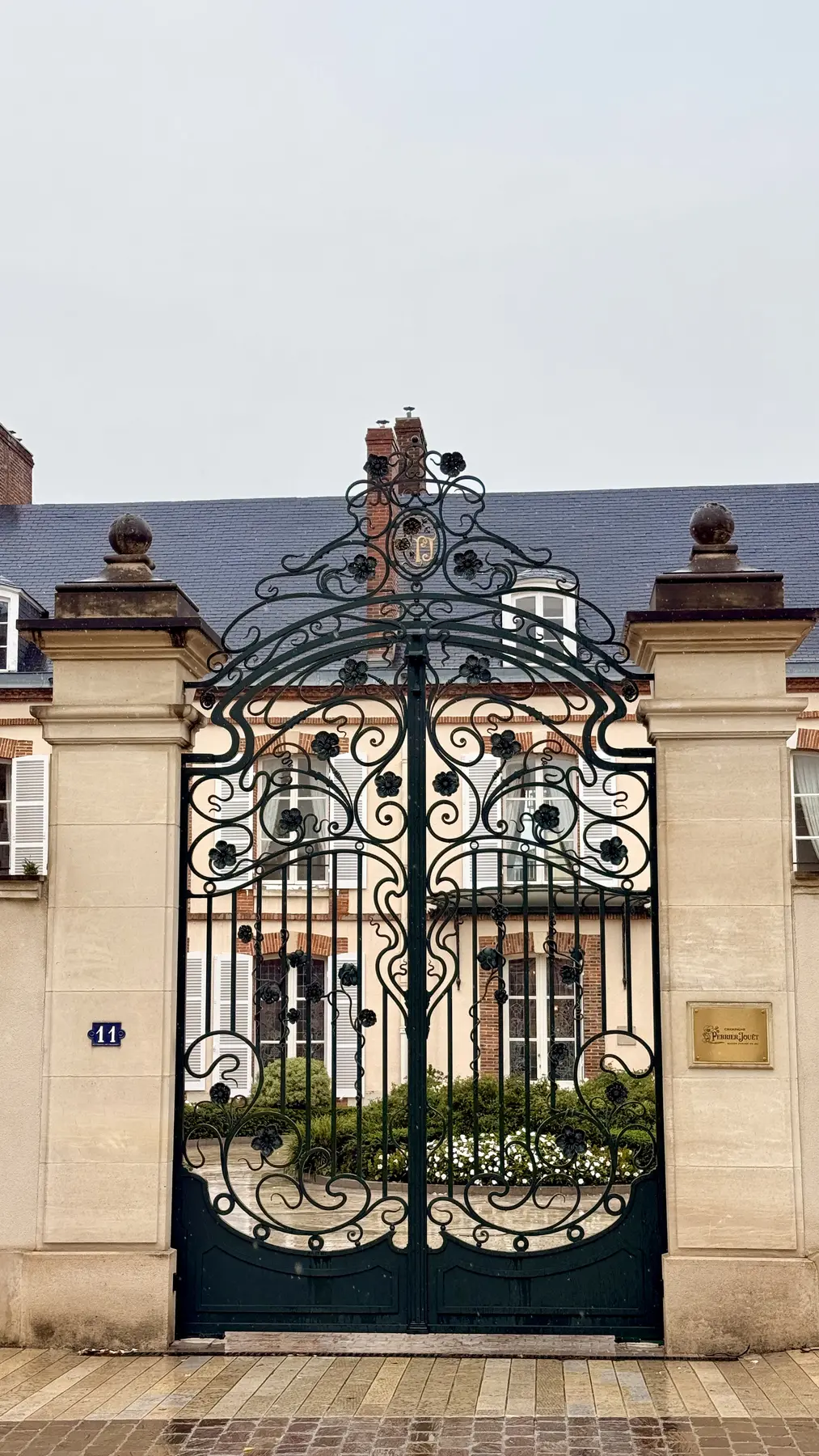
Perrier-Jouët · Maison Belle Epoque
Champagne, Art Nouveau
and the rhythm of nature.
Lunch in a late nineteenth-century residence, where the anemone runs not only across the bottles and glasses, but through the entire way the experience has been conceived.
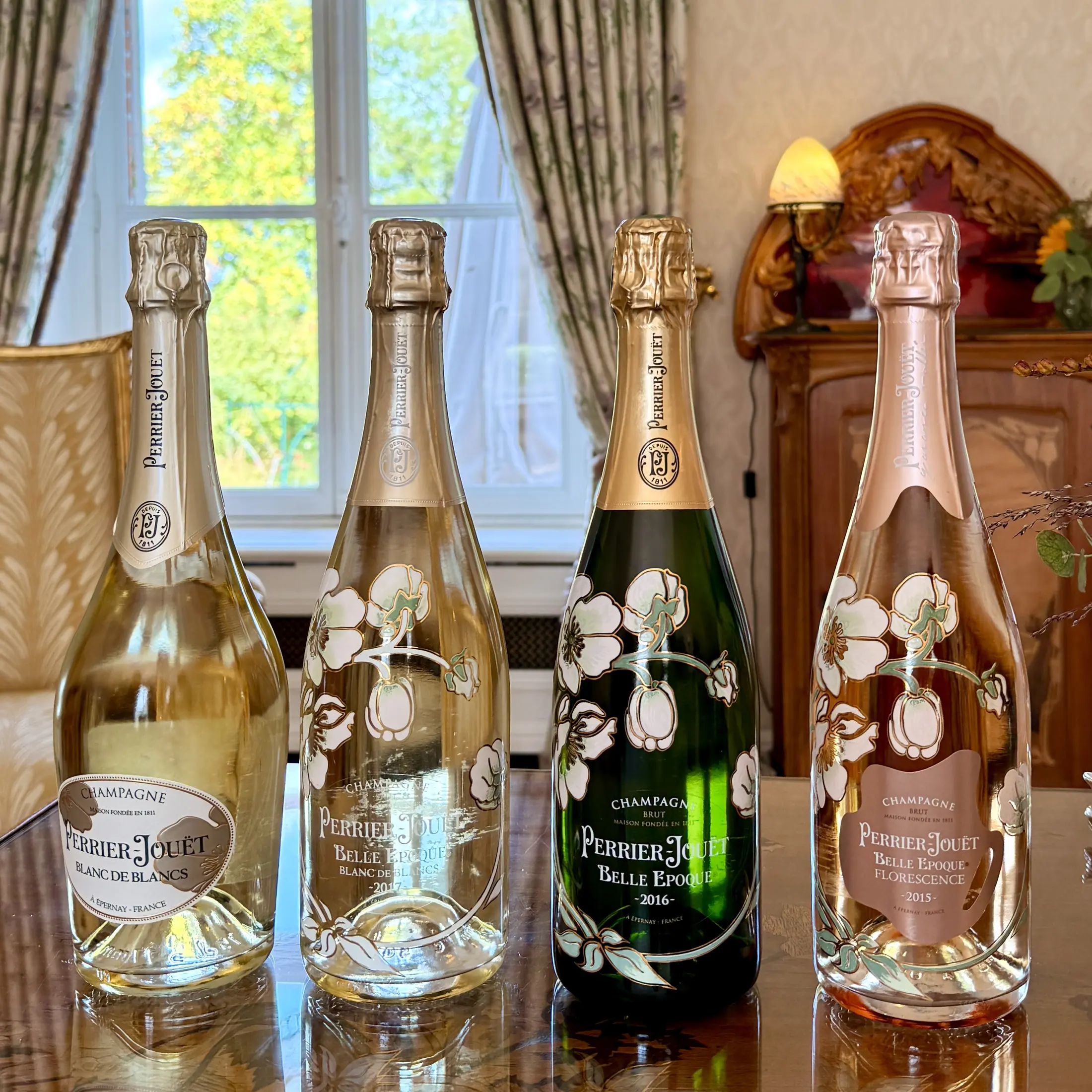
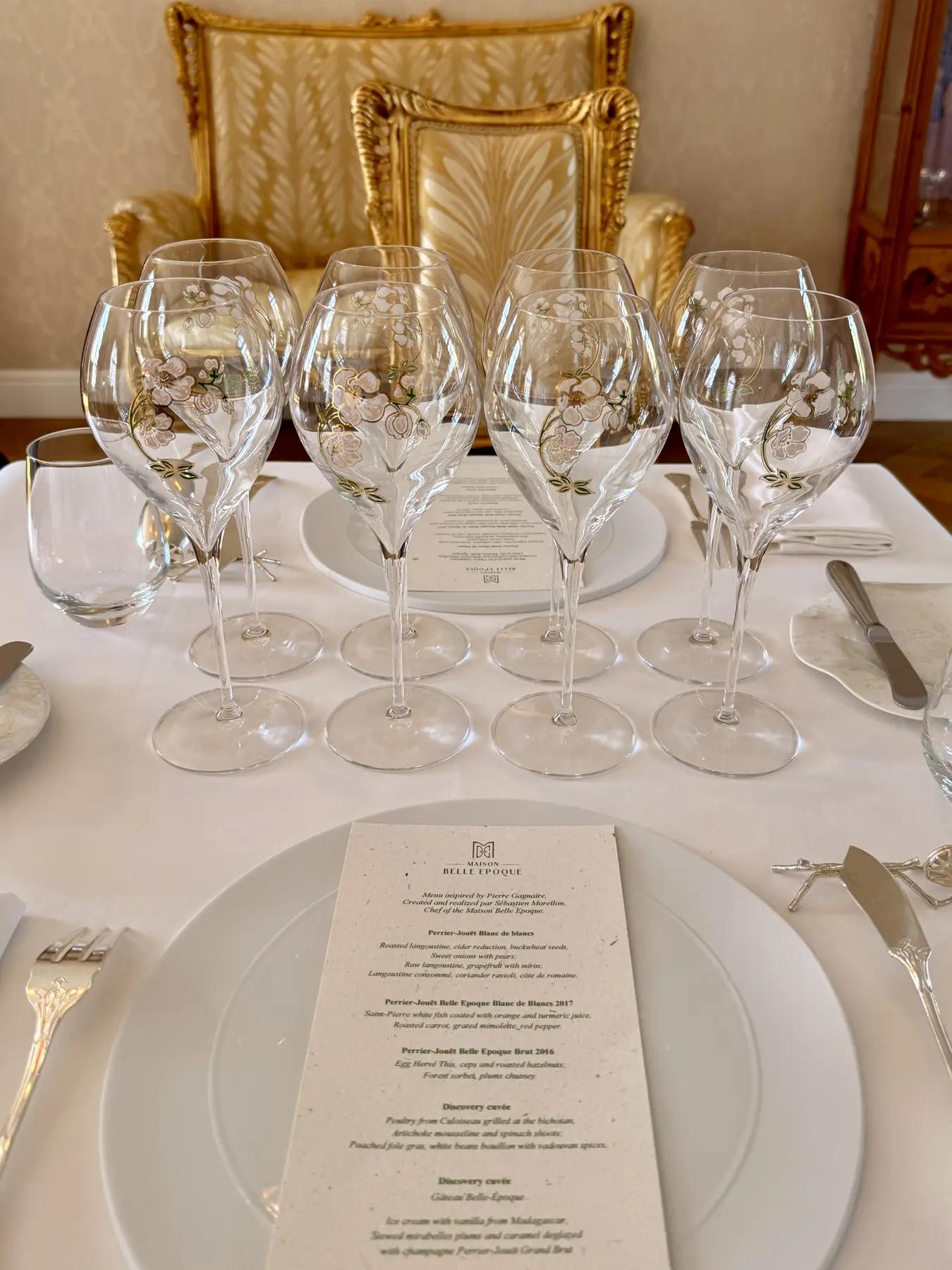
Stepping through the doors of Maison Belle Epoqueis not like entering a conventional tasting room. The furniture of the late nineteenth-century residence, its Art Nouveau collection and contemporary works create a setting in which Perrier-Jouët’s visual world feels natural rather than staged. Even the hand-painted glasses continued the delicate botanical motif that made the Belle Epoque bottles iconic.
Cuisine and Champagne in an equal dialogue
The menu was inspired by Pierre Gagnaire and brought to life by Maison Belle Epoque’s chef, Sébastien Morellon. The first course immediately signalled the direction: Perrier-Jouët Blanc de Blancsmet roasted and raw langoustine, a cider reduction, buckwheat, grapefruit and coriander ravioli. Many elements, yet a light and precise structure — the same kind of detail I admire in the house’s finest Chardonnay-led wines.
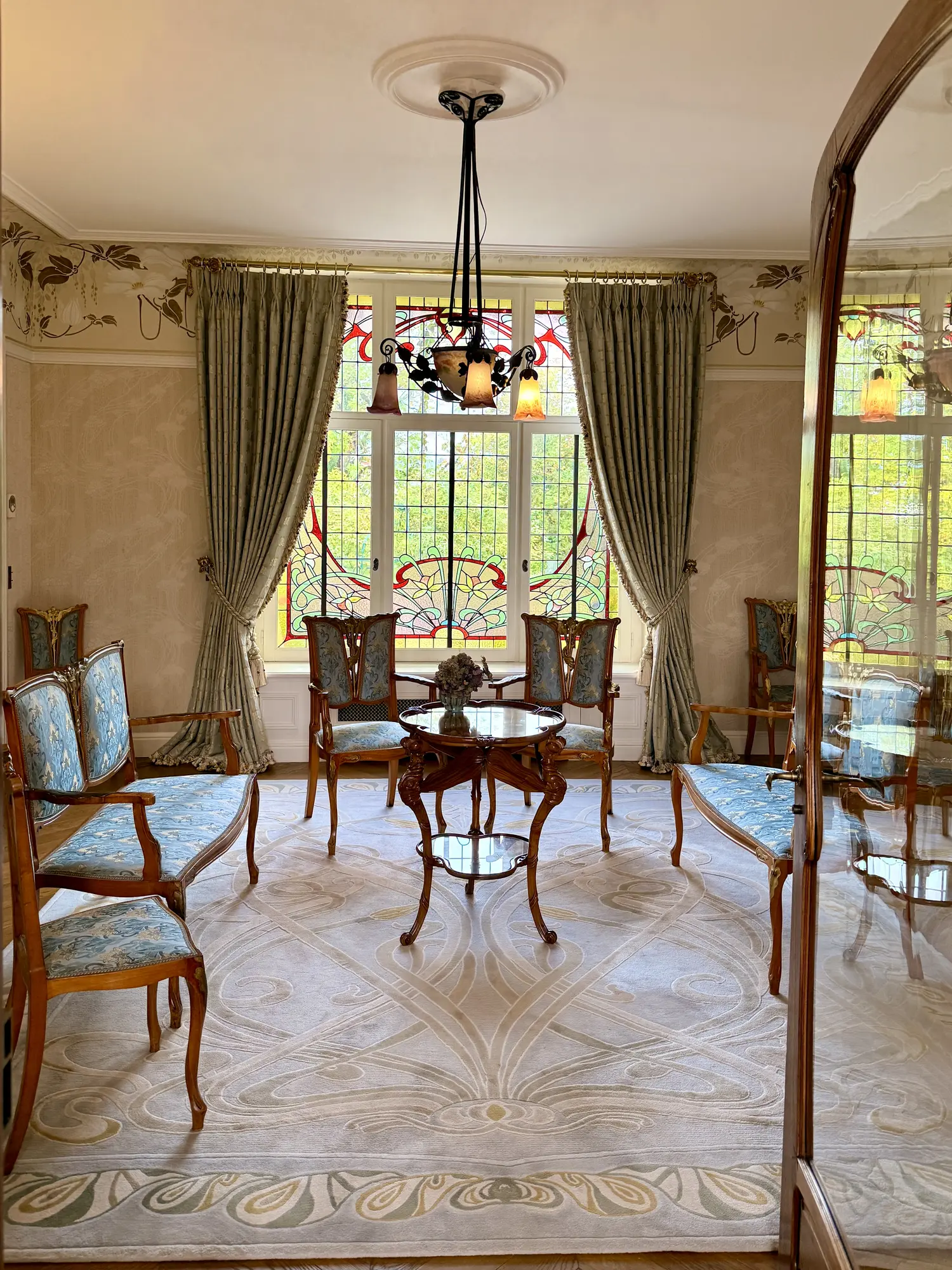
Belle Epoque Blanc de Blancs 2017 arrived with John Dory, an orange and turmeric jus and roasted carrot. It was followed by Belle Epoque Brut 2016 with the famous ‘Hervé This egg’, porcini and toasted hazelnut. The pairings were not built around a single shared aroma; instead, they explored texture, freshness and contrast.
At Maison Belle Epoque, the floral motif is not decoration. It is a visible expression of the house’s relationship with nature.
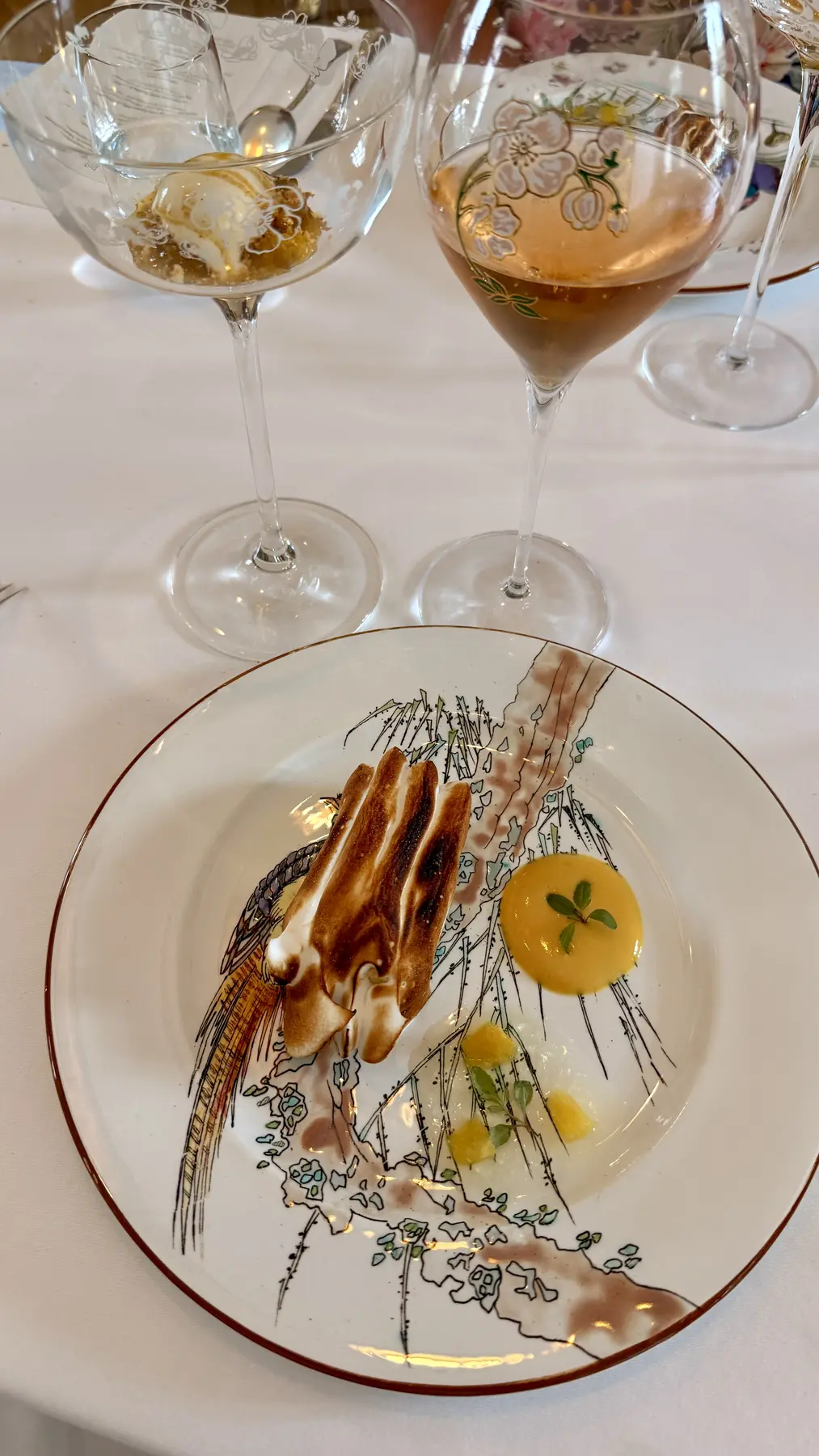
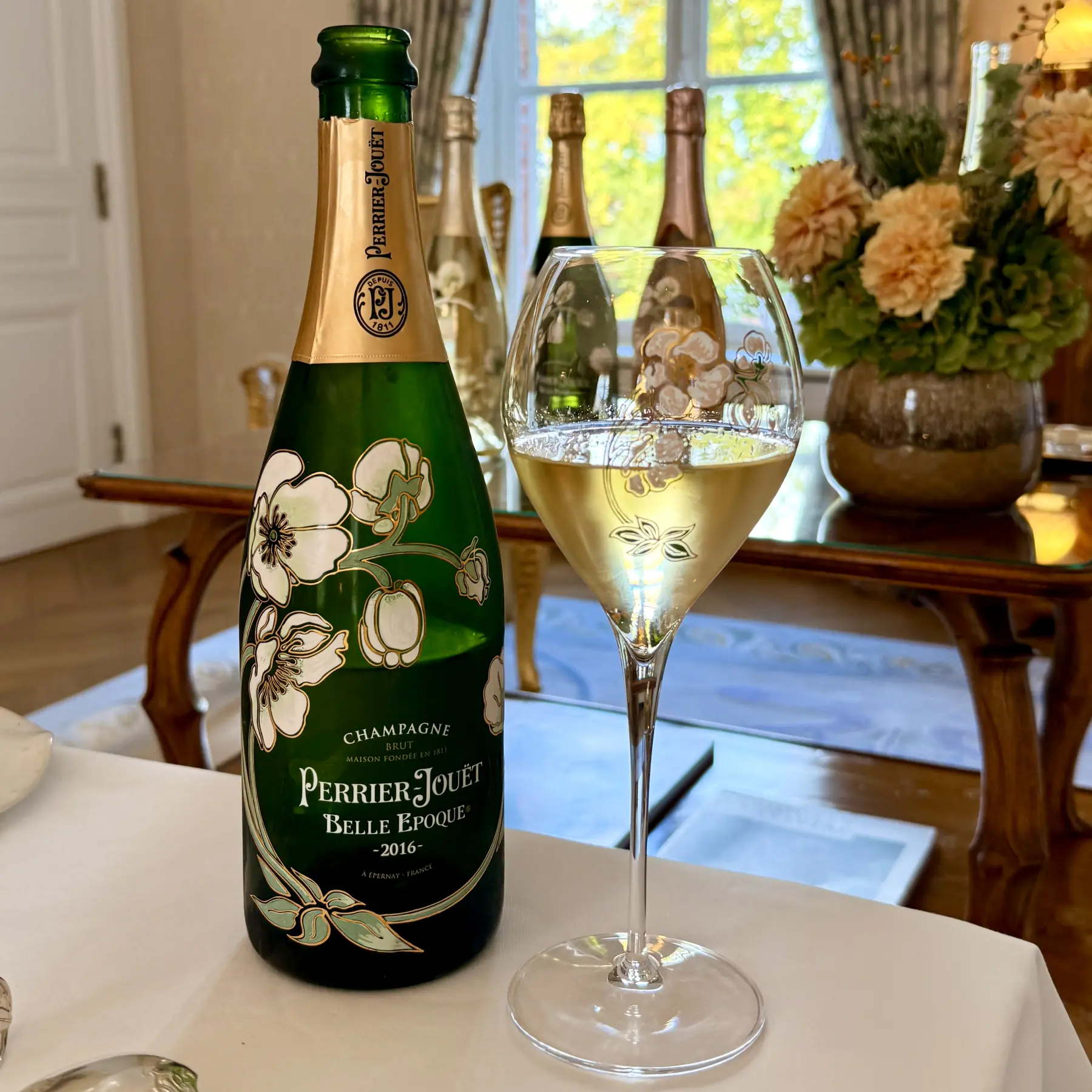
Glasses left for discovery
In the second half of the menu, the names of two wines were deliberately concealed: the card described them only as ‘cuvées to discover’. One accompanied poultry grilled over binchotan, artichoke and white beans with vadouvan; dessert was built around Galette Belle Epoque, Madagascan vanilla and mirabelle. Alongside the two vintage Belle Epoque cuvées, the line-up included Belle Epoque Florascence 2015 — another example of the many faces through which the house can express floral lightness.
By the end of the day, the interior, the glasses, the menu and the Champagnes had become a single story. Its greatest strength was not spectacle but consistency: every detail spoke of the same nature-led, delicate and elegant house style. It is a rare experience when a lunch can reveal so precisely what makes a Champagne house recognisable even before the glass reaches your lips.